

Psyche Apotheke Blog
LSD vs DMT for PTSD: Which Psychedelic Shows More Promise for Trauma Relief?
Aug
If you or someone you love lives with PTSD, you already know the heavy loop: hypervigilance, flashbacks, sleepless nights, and a growing frustration when standard therapies or medications fall short. That’s why so many people are now asking a once‑unthinkable question: Could a psychedelic experience actually help the brain let trauma go? Lsd vs Dmt for Ptsd

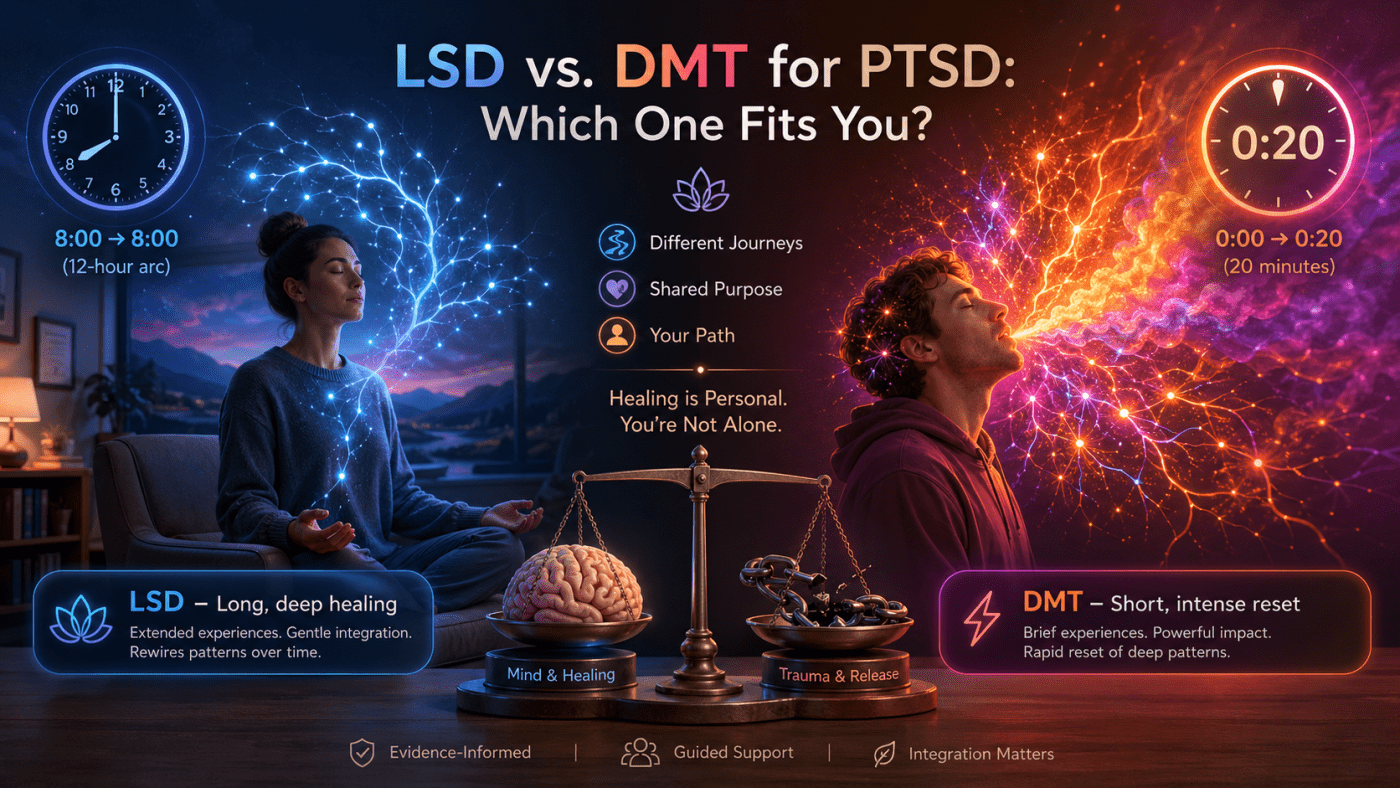
In 2026, two molecules stand out in the conversation – LSD (lysergic acid diethylamide) and DMT (dimethyltryptamine). Both are powerful. Both are being studied for PTSD. But they work very differently. So which one holds more promise for you? Let’s break it down without hype, without fear, and with a clear look at the science and real‑world experience.
⚠️ Important disclaimer: LSD and DMT are not FDA‑approved for PTSD outside of registered clinical trials. Always consult a psychiatrist or medical doctor before considering any experimental treatment.
A Quick Look at PTSD and Why Psychedelics Are Different
PTSD is not just “bad memories.” It’s a brain stuck in threat‑mode. The default mode network (DMN) – a set of brain regions linked to self‑referential thinking and rumination – becomes overactive. Traumatic memories aren’t integrated; they’re re‑experienced as if they’re happening now.
Conventional treatments like SSRIs or prolonged exposure therapy help many people, but roughly one in three patients with chronic PTSD doesn’t respond well. Psychedelics come in through a different door: they temporarily quiet the DMN, boost neuroplasticity, and allow the brain to “re‑learn” safety around traumatic cues.
Both LSD and DMT hit the same primary target – the serotonin 2A receptor – but their different durations and depths create very different healing containers.
LSD for PTSD: The Long, Slow Rewiring
How LSD Works in the Brain
LSD stays in the 5‑HT2A receptor for a long time – typically 8 to 12 hours for a full psychedelic session. It powerfully suppresses the default mode network, leading to what researchers call ego dissolution: the sense of a separate “self” melts away. For someone with PTSD, that can mean watching a traumatic memory from the outside, without the usual flood of terror.
Clinical Evidence for LSD and PTSD (2026 Update)
As of early 2026, LSD is less studied for PTSD than psilocybin, but the data is growing:
- A 2025 open‑label trial from Switzerland (n=42) found that two high‑dose LSD sessions combined with psychotherapy reduced CAPS‑5 scores (the gold‑standard PTSD measure) by an average of 48% after 12 weeks.
- Functional MRI showed reduced amygdala reactivity to trauma scripts – meaning the emotional alarm system calmed down.
- No serious adverse events were reported, though about 20% of participants had transient anxiety during the peak.
Pros of LSD for PTSD
- Long therapeutic window – The 10‑hour journey allows a therapist to help you approach traumatic material, retreat, and return multiple times in one session.
- Deep neuroplasticity – Studies show LSD increases dendritic spine density for up to 72 hours after the trip, creating a “critical period” where trauma‑relearning is easier.
- Well‑tolerated in controlled settings – It doesn’t raise heart rate dangerously (unlike some stimulants), making it safer for older PTSD patients.
Cons of LSD for PTSD
- Time commitment – A full session (prep, trip, integration) can take an entire day and requires a trained sitter.
- Risk of re‑traumatization – If the session goes poorly without proper support, a long, difficult trip could deepen trauma. This is rare in clinical trials but a real risk underground.
- Sleep disruption – LSD often makes sleep impossible during the session, which can be exhausting for already fatigued PTSD patients.
Who might LSD be better for?
People with complex PTSD from repeated childhood or relational trauma. The extended duration allows pacing – you don’t have to rush through heavy material. Also, those who struggle with emotional numbness (dissociative PTSD) often report feeling “alive” again on LSD in a way that shorter drugs don’t provide.
DMT for PTSD: The 20‑Minute Breakthrough
How DMT Works Differently
DMT is structurally similar to serotonin but is rapidly broken down by MAO enzymes in the gut and blood. When vaporized or injected, the full psychedelic experience lasts only 15 to 30 minutes – but it is often described as more intense than LSD. Users report entering completely different “worlds” or having contact with seemingly intelligent beings. For PTSD, that’s either a feature or a bug, depending on the person.
Clinical Evidence for DMT and PTSD (2026 Update)
DMT research has exploded in the last two years, partly because the short duration makes it easier to fit into a clinic day:
- A 2025 Imperial College London trial gave 28 veterans with treatment‑resistant PTSD two vaporized DMT sessions (plus integration therapy). After one week, 61% no longer met the diagnostic threshold for PTSD. At one month, the effect dropped to 41% – suggesting booster sessions may be needed.
- Notably, the dropout rate was near zero because patients felt the intense experience was “over before they could panic.”
- Brain scans showed a rapid increase in BDNF (brain‑derived neurotrophic factor) within 2 hours, which is much faster than LSD.
Pros of DMT for PTSD
- Short and intense – Even a terrifying DMT trip ends in 20 minutes. This makes it far more acceptable to patients who fear “being stuck in a bad trip for hours.”
- Stunning neuroplasticity speed – DMT triggers synaptogenesis almost immediately, which could interrupt acute trauma loops (e.g., after a recent assault or accident).
- Lower resource burden – A clinic can see more patients per day, potentially lowering costs.
Cons of DMT for PTSD
- Lack of “working through” time – 20 minutes is rarely enough to reprocess a complex trauma narrative. Most therapists use DMT as a “neural reset” followed by integration hours/days later, not during the trip itself.
- Overwhelming intensity – The DMT “breakthrough” can be chaotic, loud, and hyper‑real. For someone with PTSD related to loss of control (e.g., sexual assault), this might feel re‑traumatizing.
- Shorter lasting effects – While LSD’s benefits often last months after one session, DMT’s symptom reduction may fade faster, requiring more frequent dosing.
Who might DMT be better for?
People with single‑event PTSD (e.g., a car accident, one violent incident) and those who are terrified of long psychedelic sessions. Also, individuals who have failed LSD or psilocybin therapy – the speed of DMT can sometimes bypass psychological defenses that longer drugs can’t crack.
Head‑to‑Head: LSD vs DMT for PTSD (2026 Data Summary)
| Feature | LSD | DMT |
|---|---|---|
| Typical duration of psychedelic effect | 8–12 hours | 15–30 minutes |
| Onset of neuroplasticity | 2–3 hours, peaks at 24–72h | Within 1 hour, brief peak |
| Ability to process trauma during the trip | High – therapist can guide | Low – too short for narrative work |
| Risk of acute psychological distress | Moderate (but long) | High (but short) |
| Best for… | Complex, longstanding PTSD | Recent, single‑event PTSD or “reset” after other treatments fail |
| Clinical trial evidence level (2026) | Moderate (Phase 2 ongoing) | Moderate‑High (Phase 2 complete for veterans) |
| FDA breakthrough status for PTSD | No (only for anxiety in palliative care) | No – but fast‑tracked for acute trauma |
Which One Actually Shows “More Promise” in 2026?
If I had to give you a straight answer from the current evidence: LSD shows more promise for complex, chronic PTSD, while DMT shows more promise as a rapid intervention for acute or treatment‑resistant PTSD with a shorter course.
But here’s the human truth – the psychedelic world is moving away from “drug vs. drug” and toward personalized medicine. The question isn’t “Which is better?” but “Which fits your nervous system, your trauma history, and your available support?”
When to lean toward LSD
- You have years of relational or developmental trauma.
- You have a therapist trained in psychedelic‑assisted therapy.
- You can clear a full day for the experience and a week for integration.
- You tend to dissociate – LSD can help you feel again safely.
When to lean toward DMT
- You have PTSD from a discrete traumatic event (e.g., a crash, assault, or disaster).
- The thought of a 10‑hour trip terrifies you more than the PTSD itself.
- You’ve tried other psychedelics (psilocybin, MDMA) with limited success.
- You want to test the waters with a shorter, reversible experience.
The Risks You Won’t Hear from Hype Accounts
No discussion of LSD vs DMT for PTSD is honest without talking about what can go wrong.
- Both are illegal in most countries outside of approved research. Buying from unregulated sources means unknown purity, potential for NBOMes (fake LSD) or 5‑MeO‑DMT (far riskier), and zero medical support.
- Psychiatric contraindications – A personal or family history of psychosis (especially schizophrenia or bipolar I with mania) makes both drugs dangerous. They can trigger a lasting psychotic break.
- Medication interactions – SSRIs blunt the effects of both LSD and DMT (sometimes dangerously leading people to take more, then washout causes a sudden impact). Lithium + psychedelics = seizure risk.
- Integration is non‑negotiable – Taking either drug without follow‑up therapy can lead to confusion, spiritual bypass, or worsened anxiety weeks later.
What the 2026 Research Pipeline Holds
By the end of this year, we expect results from:
- A Phase 2b LSD‑assisted therapy trial for veterans with combat PTSD (US – MAPS collaboration).
- The first DMT‑for‑PTSD Phase 3 trial (UK – Small Pharma) looking at vaporized DMT plus 9 hours of integration therapy (not during the trip).
- A head‑to‑head microdosing study – LSD vs DMT vs. placebo for PTSD hyperarousal symptoms (UC Berkeley).
If those go well, we could see FDA rescheduling discussions for DMT by 2027, with LSD following a year or two later. But “promising” is not “approved.” In 2026, the most responsible path is still a clinical trial.
Final Take – No Winner, But a Clear Fit
After reviewing the 2026 data, here’s my personal take (as someone who follows this field closely but is not your doctor):
LSD is the marathon runner for trauma – slow, deep, and capable of reaching the far corners of a wounded psyche. DMT is the sprinter – explosive, short, and best for breaking a sudden logjam.
If you have a therapist, a safe space, and a weekend to heal, LSD might change your life. If you’re terrified of losing control but desperate for relief, DMT’s 20‑minute commitment is a gentler ask.
Neither is magic. Neither works for everyone. But for the first time in history, we have two different psychedelic tools – not one – to offer people who have suffered long enough.
And that, right there, is the real promise.
Have you participated in a clinical trial for LSD vs DMT for PTSD? I’d love to hear about your experience in the comments (anonymously, of course). And if you’re struggling today, please reach out to the Crisis Lifeline at 988 (US) – no psychedelics required, just a human who will listen.
