


The LSD Vial: A Deep Dive into Liquid LSD Chemistry, Dosage, and Safety
An LSD vial is one of the most enigmatic and potent forms of a substance that has captivated and polarized society for decades. Far more than just a small bottle, it represents the purest, most concentrated version of lysergic acid diethylamide a compound so powerful that a single drop can contain a universe-altering experience. This comprehensive guide explores the chemistry, history, practical considerations around dosage, storage, and the essential safety knowledge surrounding liquid LSD in vials.
What is an LSD Vial? Understanding the Potent Liquid Form
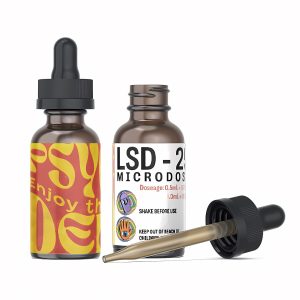
When people refer to an “LSD vial,” they are talking about a small container often a glass dropper bottle that holds LSD in its liquid form. Unlike the more common blotter paper tabs, this liquid is typically created by dissolving pure LSD crystal in a solvent. The result is a solution where a single, minuscule drop can deliver a full psychoactive dose.
Pure LSD is a colorless and odorless substance in its crystalline form before it is dissolved.– This clarity is what makes the liquid form so deceptively dangerous; it looks indistinguishable from water, yet its potency is measured in millionths of a gram. The vial serves as both a storage and delivery method, allowing users to dispense the solution one drop at a time onto blotter paper, sugar cubes, or directly into the mouth.
The central challenge of an LSD vial is the extreme variability in its concentration. A single drop from one vial might be 50 micrograms (µg), while a drop from another could be 300 µg a sixfold difference that can lead to vastly different experiences. This lack of standardization is a defining risk of the liquid form.
From Ergot Fungus to Eye Dropper: A Brief History
The story of the LSD vial begins not in a counterculture laboratory, but in a pharmaceutical one. LSD was first synthesized by Swiss chemist Dr. Albert Hofmann in 1938 at Sandoz Laboratories. While researching derivatives of lysergic acid found in the ergot fungus that grows on rye, he created the 25th compound in his series: LSD-25.
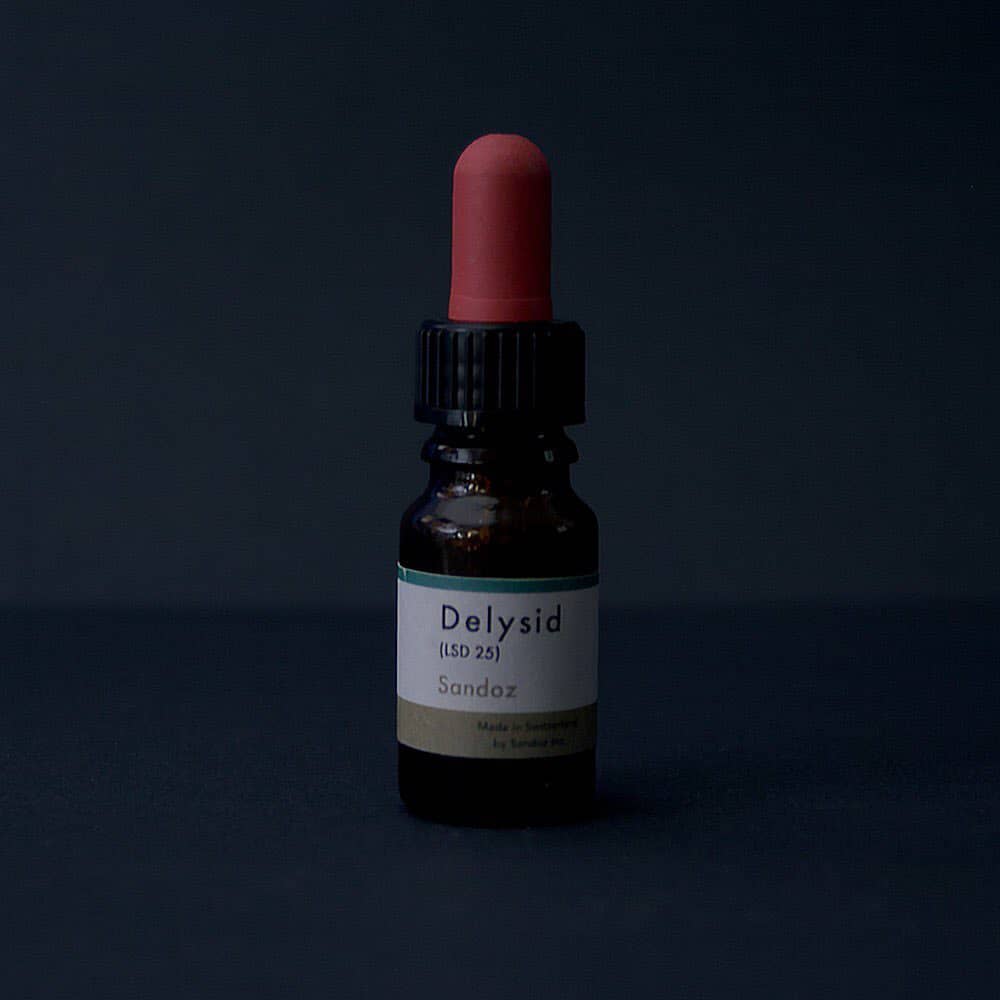
Its psychoactive properties weren’t discovered until five years later, on April 19, 1943 a date now commemorated as “Bicycle Day.” After accidentally absorbing a small amount through his skin, Hofmann intentionally ingested 250 µg and experienced the world’s first acid trip while riding his bicycle home. In the years that followed, Sandoz marketed LSD under the trade name Delysid, distributing it in small amber vials and ampoules for use in psychotherapy and psychiatric research.
The liquid form was central to early clinical use, as it allowed for precise dosing. A typical treatment session started with a low dose of 25 µg, and subsequent sessions increased the dose incrementally to find the optimal therapeutic level, often between 50 and 200 µg.– However, as LSD escaped the lab and spread into recreational culture through figures like Timothy Leary, the vial became a symbol of the drug’s unregulated and unpredictable nature. By the late 1960s, it was classified as a Schedule I substance in the United States, halting most legitimate research for decades.
The Chemistry of Liquid LSD: Solubility and Stability
Understanding an LSD vial requires a grasp of its chemistry. LSD is a semi-synthetic ergoline alkaloid that is soluble in water and other solvents. Liquid LSD is typically dissolved in ethyl alcohol or distilled water. The science behind this dissolution lies in hydrogen bonding involving the lone pairs of the amine groups within the LSD molecule, which makes it surprisingly compatible with aqueous solutions.
However, this liquid state is also where the molecule is most vulnerable. LSD is subject to degradation from four main environmental factors: heat, light, oxygen, and moisture. These “enemies of LSD” can cause the molecule to break down into inactive iso-LSD, a process known as epimerization
A pivotal 1998 study on LSD stability under various conditions revealed critical findings for anyone possessing a vial. It showed that LSD remains stable for up to four weeks at room temperature (25°C) when kept in the dark. However, the degradation accelerates dramatically with heat: incubation at 37°C (body temperature) resulted in a 30% loss in potency after four weeks, while storage at 45°C led to a 40% loss.
The same study demonstrated that ultraviolent (UV) light is even more aggressive. LSD in a transparent container and exposed to UV light could decompose by 10% in just one hour, compared to a week under fluorescent light. This is why vials are almost always made of dark amber glass, which filters out harmful wavelengths and protects the integrity of the solution. For long-term storage, experts recommend keeping the amber vial in a cool, dark, and airtight environment, such as a refrigerator or freezer, though care must be taken to avoid condensation when warming the vial for use.
LSD Vial vs. Blotter Tabs: A Potency and Practicality Comparison
While an LSD vial contains the drug in its dissolved state, blotter paper is the most ubiquitous form. Blotters are created by soaking sheets of absorbent, often decoratively printed paper in a liquid LSD solution and then cutting the dried sheets into small, perforated squares called “tabs.”
The relationship between liquid LSD and blotter tabs is intrinsic every blotter starts its life as a liquid in a vial. The key differences lie in dosing accuracy, stability, and discretion:
-
Blotter Tabs: These are far easier to transport and use discreetly. They also offer a degree of “buffered” safety, as a single tab typically contains a standardized dose, commonly between 30 and 100 µg. However, the dose is fixed, making microdosing or splitting doses difficult. Blotters are also susceptible to degradation, though slightly more stable than liquid form.
-
Liquid Vial: The vial offers extreme dosing flexibility. A single drop can be a microdose or a heroic dose, depending on concentration. This makes it ideal for creating volumetric doses (dissolving a tab or a drop into a known volume of water for precise sub-division).– The major trade-off is risk: the liquid is slower to degrade, but a single miscalculation can lead to an overwhelmingly intense experience. As the saying goes in the community, “Liquid LSD is as pure as it comes, and as dangerous as you make it.”
The Critical Art of Dosing: From Micrograms to Life-Changing Experiences
Dosing liquid LSD is a practice in precision, as the effective range exists entirely within microgram measurements. A single microgram (µg) is one-millionth of a gram the weight of a single grain of sand.【10†L10-L101†L20-L21】– The dose-response curve for LSD is profound:
| Dosage Range | Effects & Description |
|---|---|
| Threshold (10-20 µg) | Subtle changes in perception and mood, used for microdosing. |
| Light (20-75 µg) | Mild euphoria, slight visual enhancements, and creativity boost. |
| Common (50-150 µg) | The standard “trip”: full visual hallucinations, altered thinking, and sensory distortion. |
| Strong (150-400 µg) | Intense, immersive visual and auditory effects, ego dissolution, and profound introspection. |
| Heavy (400+ µg) | Complete dissolution of self, extreme time distortion, and powerful spiritual or mystical experiences. |
The biological potency of LSD means a standard common dose starts at 100 µg. For users looking for a full-blown psychedelic experience, the window for a “good high” typically sits between 100 and 200 µg. The half-life of LSD in the body is about 3 hours, but the most intense psychoactive effects can last from 6 to 12 hours.
The challenge with a vial is that one “drop” is not a scientific unit of measurement. A drop from a standard eye dropper can be 50 µg, but a thicker liquid or different dropper tip could change that volume tenfold. This ambiguity is the primary reason harm reduction experts never recommend applying drops directly to the tongue without prior calibration.
Storage Protocols: Preserving the Molecule’s Integrity
For a substance measured in millionths of a gram, environmental protection is paramount. The storage of an LSD vial is not just about maintaining potency; it’s a direct practice of chemical stewardship. The protocol, refined by decades of anecdotal and now scientific evidence, focuses on mitigating the four primary catalysts of degradation.
A systematic review of stability data reveals a clear hierarchy of storage conditions. The table below synthesizes findings from controlled studies and community best practices to illustrate how different environments impact LSD’s molecular integrity over time:
| Storage Condition | Expected Stability Profile | Key Mechanism of Protection |
|---|---|---|
| Amber Glass, 25°C | No significant loss for up to 4 weeks. | Blocks UV and visible light degradation. |
| Amber Glass, 37°C | Approximately 30% loss after 4 weeks. | Partial thermal degradation despite light protection. |
| Amber Glass, 45°C | Up to 40% loss after 4 weeks. | Accelerated epimerization and thermal breakdown. |
| Freezer (-20°C), Airtight | Potency maintained indefinitely (years). | Virtually arrests thermal degradation and oxidation. |
| Room Temp, Light Exposed | 10% loss in 1 hour (UV light). | No protection from photolytic decomposition. |
Source: Adapted from Li Z, McNally AJ, Wang H, Salamone SJ. “Stability study of LSD under various storage conditions”. J Anal Toxicol. 1998.
-
Container Material: Dark amber glass is the gold standard. It acts as a shield against damaging wavelengths of light. Transparent or translucent polyethylene containers provide some protection, but glass is superior for long-term preservation.
-
Temperature: Lower temperatures slow down molecular activity. While storage at room temperature is acceptable for short periods, a freezer set to around -4 degrees Fahrenheit is optimal for multi-year storage.
-
Airtight Seal: Oxygen is a persistent threat. Ensuring the cap is tightly sealed prevents both oxidation and the ingress of moisture, which can accelerate degradation.
The Pharmacology of LSD: A Neurological Symphony
LSD’s profound effects originate from its structural similarity to the neurotransmitter serotonin. It primarily exerts its influence by binding to serotonin 5-HT2A receptors in the brain’s prefrontal cortex, triggering a cascade of neurochemical events that disrupt the thalamocortical gating system. This disruption is what floods the conscious mind with sensory information, causing mixing of senses (synesthesia), visual hallucinations, and ego dissolution.
The experience, or “trip,” is not merely a visual show. It profoundly alters emotional processing and the default mode network a brain system associated with self-referential thought and mind-wandering. The decoupling of this network is linked to the feeling of “ego death,” where the sense of self dissolves into a universal oneness, an experience that many users describe as profoundly spiritual.
Physiologically, LSD activates the sympathetic nervous system. This results in dilated pupils, increased heart rate and blood pressure, elevated body temperature, and sweating. These effects are generally not life-threatening in healthy individuals but can exacerbate pre-existing cardiovascular conditions.
Risks, Bad Trips, and Adverse Effects
The unpredictability of an LSD experience is its greatest inherent risk. A “bad trip” is a terrifying experience characterized by severe anxiety, paranoia, and a sense of impending doom. This psychological crisis can be as impactful as a physical injury. Users may lose control of their fears and experience uncontrollable negative thought loops.
While LSD is not considered physically addictive and does not cause compulsive drug-seeking behavior, tolerance builds almost immediately. Using LSD for just a few days in a row can drastically diminish its effects, requiring a break of several days to reset sensitivity.
Perhaps the most persistent risk even after the drug has worn off is Hallucinogen Persisting Perception Disorder (HPPD), commonly known as “flashbacks.” These are spontaneous recurrences of visual or sensory distortions from a past trip, often triggered by stress, fatigue, or other drug use. While for many these are infrequent and diminish over time, for some, they can become a chronic and distressing condition.
Harm Reduction: Navigating the Vial with Informed Respect
In the absence of legal regulation, harm reduction principles are the cornerstone of safety. These strategies are not about endorsing use, but about minimizing catastrophic outcomes for those who choose to engage with the substance.
-
Calibration is Key: Never trust a single drop to be a standard dose. A visual guide is useless. Instead, create a volumetric solution: mix one drop from the vial into a measured amount of distilled water or alcohol. Then, use a sterile 1ml syringe to administer a fraction of that liquid, allowing for a controlled, incremental dosage.
-
Substance Testing: The unregulated market is flooded with research chemicals, notably the NBOMe series, which are sold fraudulently as LSD. These substances are active at similar microgram levels but can cause severe vasoconstriction, overdose, and death. A simple Ehrlich reagent test kit can confirm the presence of an indole alkaloid like LSD (turning purple) and rule out dangerous imposters. If a tab or liquid has a distinctly bitter or metallic taste, it is not LSD.
-
Set and Setting: The motto of “set (mindset) and setting (environment)” is the most critical variable after dose. A calm, familiar, and safe physical space, coupled with a positive, open mental state, is the most powerful tool for navigating a psychedelic experience. A sober, trusted “trip sitter” is an invaluable safeguard.
-
The “Washout” Warning: Never assume an “empty” vial is truly empty. A thin, often invisible film of LSD can coat the inside walls of the glass, holding multiple doses. Rinsing the vial and drinking the contents has led to notoriously overwhelming and unexpected experiences.
The Therapeutic Renaissance and Modern Research
After a decades-long research hiatus, the LSD vial, in a metaphorical sense, is returning to the laboratory. A resurgence of clinical interest, often called the “psychedelic renaissance,” is investigating LSD’s potential to treat conditions like treatment-resistant depression, anxiety associated with life-threatening illness, and alcohol use disorder.
Modern studies use precisely calibrated pharmaceutical-grade liquid solutions to explore microdosing the practice of taking sub-perceptual doses (5-20 µg) to enhance creativity, focus, and mood without inducing a full trip. Recent analytical work has highlighted the importance of this precision, with studies finding significant discrepancies between user-estimated and actual LSD levels in illicit microdosing samples. A new High Performance Liquid Chromatography (HPLC) method has been developed to accurately quantify LSD in these tiny amounts, ensuring safety for both clinical and community applications.– This clinical avenue brings the story of the LSD vial full circle, from a promising psychiatric tool in the 1950s, to a demonized street drug, and now, cautiously, back to a medicine of the future.
The LSD vial is therefore a powerful paradox: a vessel of pure potential that demands the utmost respect. Its contents can unlock profoundly spiritual and therapeutic experiences or catalyze terrifying psychological crises. Understanding its chemistry, respecting its potency, and adhering to rigorous safety protocols are the only ways to navigate its complexities. In the end, the most critical element within any LSD vial is not the molecule itself, but the knowledge and intention of the person who holds it.
Disclaimer: This content is for informational and educational purposes only. LSD is classified as a Schedule I controlled substance in the United States and is illegal in many other jurisdictions. This article does not promote, condone, or advocate the use, production, or distribution of LSD or any other illicit substances. Always consult with a qualified healthcare professional for any medical or mental health-related concerns.
3 reviews for LSD Vial
Add a review
Related products

BUY LSD

BUY LSD
BUY LSD
BUY LSD
BUY LSD
Alene Furger –
Highly recommend this shop. I was skeptical about the products because of mixed reviews I read about the delivery. My order was delivered to me within 48h of placing the order… amazing. 10/10 experience. If you’re having any doubts about Psychedelics Apotheke please just take my word for it, this place is legit! Can’t wait to order again.
Miguel Gravinda –
These vials saved me from years of uncontrollable depression, anxiety and illicit pill addiction. Imagine carrying heavy chains for over a decade and then all of a sudden that burden is gone. Believe it or not in a couple years the be all over for treatment of mental health related issue. I am so happy to have ordered from Psychedelics Apotheke, Darren was very helpful
Black Griffendale –
One of the best decisions I have made purchasing the Vial! First time using the product and already blown away by the benefits I’m already seeing. An amazing product which is unique and authentic in its own right! If you’re on the fence about purchasing, don’t be, you wont regret it!