

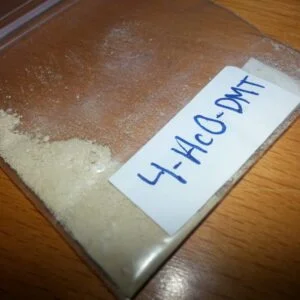

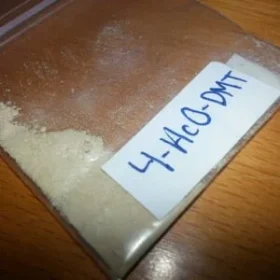
4-AcO-DMT: The Synthetic Psilocybin Analog
What Is 4-AcO-DMT?
Chemical Identity and Classification
4-AcO-DMT (4-acetoxy-N,N-dimethyltryptamine) is a synthetic psychedelic compound belonging to the tryptamine class of substances. Its chemical formula is C₁₄H₁₈N₂O₂, with a molar mass of 246.31 g/mol. The compound exists as a fumarate salt in its most common research form and has a melting point of 172-173°C (342-343°F).
The “4-AcO” in its name refers to the 4-acetoxy group attached to the tryptamine backbone a structural feature that distinguishes it from psilocybin, which contains a 4-phosphoryloxy group. Despite this difference, both compounds share a similar indole ring structure typical of tryptamines, underpinning their comparable pharmacological effects.
A Prodrug of Psilocin
Perhaps the most important aspect of 4-AcO-DMT’s pharmacology is its role as a prodrug. Like psilocybin, 4-AcO-DMT is converted by the body into psilocin the active compound responsible for the psychedelic effects of magic mushrooms. This means that when you ingest 4-AcO-DMT, your body metabolizes it into psilocin, which then interacts with serotonin receptors in the brain to produce its characteristic effects.
However, the conversion process differs slightly between the two compounds. Research has shown that psilocybin leads to 10-25% higher psilocin concentrations than psilacetin at 15 minutes post-injection. This pharmacokinetic difference may contribute to subtle variations in the subjective experience between natural mushrooms and synthetic 4-AcO-DMT.
Other Names and Synonyms
4-AcO-DMT is known by multiple names across different communities:
-
Psilacetin the most common trade name
-
O-Acetylpsilocin reflecting its chemical relationship to psilocin
-
Psilocetin another common variant
-
Synthetic shrooms a colloquial term highlighting its similarity to magic mushrooms
The Discovery and History of 4-AcO-DMT
Hofmann’s Synthesis (1963)
The story of 4-AcO-DMT begins with Albert Hofmann, the Swiss chemist who famously synthesized LSD-25 in 1938. In 1963, Hofmann and his colleague Franz Troxler first synthesized 4-AcO-DMT while researching analogs of psilocin. However, at the time, they did not investigate its psychoactive properties, and the compound remained largely obscure for decades.
Nichols’ Recognition (1999)
In 1999, medicinal chemist David E. Nichols highlighted 4-AcO-DMT’s potential as a more cost-effective substitute for psilocybin in pharmacological studies. This recognition was significant because psilocybindespite being a Schedule I controlled substance was increasingly being studied for its therapeutic potential. A cheaper, more accessible analog offered researchers an alternative pathway for investigation.
Emergence in the Research Chemical Market (2010s)
Following Nichols’ recommendation, 4-AcO-DMT began appearing in the online research chemical market in the 2010s. Anecdotal accounts of recreational use began to emerge, with users reporting experiences remarkably similar to psilocybin mushrooms. The compound’s legal gray area in many jurisdictions made it accessible to those seeking psychedelic experiences without the legal risks associated with Schedule I substances.
Current Status
Today, 4-AcO-DMT is increasingly recognized in both scientific and popular circles. It has been the subject of preclinical research investigating its effects on fear, anxiety, and addiction. However, its legal status is evolving rapidly, with several countries including France recently moving to classify it as a controlled substance.
How 4-AcO-DMT Works: Pharmacology and Mechanism of Action
Serotonin Receptor Activation
Like other classic psychedelics, 4-AcO-DMT exerts its effects primarily through activation of the 5-HT₂A serotonin receptor. However, its action is more nuanced than simple receptor activation.
Once metabolized into psilocin, the compound acts as a partial agonist at serotonin receptors, meaning it activates these receptors but to a lesser degree than the natural neurotransmitter serotonin itself. This partial agonism is thought to contribute to the compound’s relatively favorable safety profile compared to full agonists.
The Cortical Microcircuit Mechanism
Recent research published in the British Journal of Pharmacology has identified a specific neurological mechanism through which 4-AcO-DMT produces its effects. The study found that 4-AcO-DMT suppresses innate fear responses through activation of 5-HT₂A receptors on VIP-expressing interneurons in the prelimbic cortex.
This finding is significant because it identifies a specific cortical microcircuit involved in the compound’s effects a level of mechanistic detail rarely achieved in psychedelic research. The study demonstrated that 4-AcO-DMT significantly suppressed fear-related responses in rats, an effect mediated by recruitment of VIP interneurons.
Comparison to Psilocybin
While both 4-AcO-DMT and psilocybin are prodrugs of psilocin, they differ in their pharmacokinetics. Research has shown that psilocybin leads to higher psilocin concentrations than psilacetin at early time points. Additionally, 4-AcO-DMT is estimated to have about 20-fold lower potency at the 5-HT₂A receptor compared to psilocybin. This difference in potency and pharmacokinetics may explain subtle variations in the subjective experience between the two compounds.
Anti-Inflammatory Properties
Emerging research suggests that 4-AcO-DMT may possess anti-inflammatory properties. In cell-based studies, 4-AcO-DMT demonstrated a reduction in COX-2 expression a marker of inflammation when combined with other compounds. This anti-inflammatory effect, combined with the compound’s neuroplasticity-promoting properties, suggests potential applications beyond psychiatric conditions.
Effects of 4-AcO-DMT: What to Expect
Overview
The effects of 4-AcO-DMT are often described as very similar to psilocybin mushrooms, though many users report subtle differences. One user noted: “4-ACO-DMT is really comfortable, colorful, and clear headed. It’s a lot more simplistic in its effects compared to psilocybin, but very pleasant in its own unique way”. Another described it as “reminiscent of DMT and mushrooms but its own thing entirely”.
Onset and Duration
The timeline of a 4-AcO-DMT experience varies depending on the route of administration:
Oral Administration:
-
Onset: 20-40 minutes
-
Peak: 2-3 hours
-
Total Duration: Up to 6 hours
Rectal Administration:
-
Onset: Rapid, often within minutes
-
Peak: Faster than oral
-
Duration: Shorter than oral
Insufflated (Nasal):
-
Onset: Very rapid
-
Duration: Generally shorter than oral
Sensory Enhancements
Users consistently report a range of sensory enhancements:
-
Enhanced colors — colors appear more vivid and saturated
-
Geometric patterns — repeating shapes and patterns, particularly with closed eyes
-
Visual distortions — objects may appear to breathe, warp, or flow
-
Auditory enhancements — music sounds richer and more emotionally resonant
Psychological Effects
The psychological effects of 4-AcO-DMT are where the compound truly shines:
-
Emotional openness — increased access to emotions, both positive and challenging
-
Introspection — heightened self-reflection and insight
-
Ego softening — reduced attachment to self-concept and personal narratives
-
Mystical experiences — feelings of unity, interconnectedness, and transcendence
-
Time distortion — time may feel slowed, accelerated, or nonlinear
Differences from Psilocybin
While many users find 4-AcO-DMT nearly indistinguishable from psilocybin, some report notable differences:
-
Reduced nausea — many users report less gastrointestinal discomfort compared to eating whole mushrooms
-
Clearer headspace — some describe it as more “clear-headed” than mushrooms
-
Simpler experience — less “complex” or “layered” than natural psilocybin
-
Fewer side effects — generally less heavy body load
One user offered this nuanced perspective: “I’ve had instances with mescaline and some shrooms where it doesn’t feel like a true psychedelic experience. This however gave me the true experience and then some”.
Challenging Experiences
Like all psychedelics, 4-AcO-DMT can produce challenging experiences. Reported adverse effects include:
-
Nausea and vomiting
-
Dizziness
-
Extreme anxiety
-
Elevated blood pressure
-
Pupil dilation
-
Confusion and unclear thinking
-
Headaches
The risk of challenging experiences increases with higher doses, in the absence of proper set and setting, and when combined with other substances.
4-AcO-DMT Dosage Guide
General Considerations
Dosing 4-AcO-DMT requires careful attention due to the compound’s potency and the variability in individual sensitivity. The fumarate salt form, which is the most common research form, has a slightly different weight than other salt forms, so users should always verify the specific compound they are working with.
Oral Dosage Guidelines
Based on extensive user reports and clinical experience:
| Dosage Level | Oral Dose (Fumarate) | Effects |
|---|---|---|
| Threshold | 5-10 mg | Minimal effects, subtle mood elevation |
| Light | 10-15 mg | Mild visual enhancements, moderate emotional effects |
| Common | 15-25 mg | Full psychedelic experience, strong visuals, introspection |
| Strong | 25-35 mg | Intense experience, potential ego dissolution |
| Heavy | 35+ mg | Very intense, breakthrough potential |
Most users report taking between 15-35 mg orally for a full experience. A common starting dose for beginners is 10-15 mg.
Rectal (Plugging/Boofing) Dosage
Rectal administration offers higher bioavailability and faster onset–. Dosages are typically lower than oral due to increased absorption:
-
Light: 10-15 mg
-
Common: 15-25 mg
-
Strong: 25-35 mg
One user reported taking 22.5 mg rectally as their standard dose–, while another dissolved 50 mg in 1 mL of water for a rectal experience.
Insufflated (Nasal) Dosage
Nasal administration provides rapid onset but can be uncomfortable due to nasal irritation:
-
Light: 5-10 mg
-
Common: 10-20 mg
-
Strong: 20-30 mg
One user reported snorting 17 mg, noting “3-5 mins of slight pain, nothing compared to snorting 5-meo-mipt or a 2c.
Factors Affecting Dosage
Several factors influence the appropriate dosage:
-
Body weight — heavier individuals may require slightly higher doses
-
Individual sensitivity — some people are naturally more sensitive to psychedelics
-
Set and setting — the environment and mindset can amplify or dampen effects
-
Tolerance — like other psychedelics, 4-AcO-DMT produces rapid tolerance, though the degree is debated
Dosing Tips
-
Always start low — begin with a threshold dose to assess sensitivity
-
Use a precise scale — a milligram-accurate scale is essential
-
Consider volumetric dosing — dissolving the compound in water or alcohol allows for more precise dosing
-
Fast before use — an empty stomach reduces nausea and speeds onset
-
Have a sitter — especially for higher doses or first-time experiences
Safety and Harm Reduction
Overall Safety Profile
4-AcO-DMT is considered to have a relatively favorable safety profile compared to many other psychoactive substances. However, this does not mean it is without risks. As a serotonergic psychedelic, it does not cause respiratory depression or fatal overdose at reasonable doses. The toxic dose in humans is unknown.
Potential Risks
Psychological Risks:
-
Anxiety and panic — particularly with high doses or in uncomfortable settings
-
Psychotic episodes — rare but possible, especially in those with personal or family history of psychosis
-
HPPD (Hallucinogen Persisting Perception Disorder) — persistent visual disturbances
-
Traumatic experiences — unresolved psychological material may surface
Physiological Risks:
-
Nausea and vomiting — common, especially with oral administration
-
Blood pressure changes — temporary increases have been reported
-
Pupil dilation — a normal effect but may be uncomfortable for some
-
Gastrointestinal distress–
The EU Early Warning System has monitored tryptamines like 4-AcO-DMT since 2010 due to severe adverse effects reported in some consumers.
Contraindications
4-AcO-DMT should not be used by individuals who:
-
Have a personal or family history of psychosis or schizophrenia
-
Are taking MAOIs (monoamine oxidase inhibitors)
-
Are taking SSRIs or other serotonergic medications (risk of serotonin syndrome)
-
Are pregnant or breastfeeding
-
Have serious cardiovascular conditions
-
Are under 18 years of age
Harm Reduction Practices
-
Test your substance — use reagent testing kits to verify the compound
-
Know your dose — use a precise scale and start low
-
Set and setting — choose a safe, comfortable environment with trusted companions
-
Have a sober sitter — especially for higher doses
-
Avoid mixing — do not combine with alcohol, cannabis, or other drugs
-
Stay hydrated — but avoid overhydration
-
Integration — allow time after the experience for reflection and processing
Mixing with Other Substances
Combining 4-AcO-DMT with other substances increases risks:
-
Cannabis — can amplify effects and anxiety
-
Alcohol — may increase nausea and impair judgment
-
Stimulants — may increase cardiovascular strain
-
Other serotonergic drugs — risk of serotonin syndrome
Some users have combined 4-AcO-DMT with kratom or other substances,but these combinations are not recommended due to unpredictable interactions.
Therapeutic Potential of 4-AcO-DMT
Depression and Anxiety
Recent studies have highlighted 4-AcO-DMT’s potential in treating various mental health disorders, including depression and anxiety. Its ability to modulate serotonin receptors suggests it may help alleviate symptoms associated with these conditions.
The compound promotes neuroplasticity the brain’s ability to form new neural connections which may underlie its antidepressant effects. A derivative of psilacetin has shown anxiolytic properties and the ability to enhance learning and memory.
Fear and Trauma
Perhaps the most compelling recent research on 4-AcO-DMT involves its effects on fear. A 2026 study demonstrated that 4-AcO-DMT suppresses innate fear responses through a specific cortical mechanism involving 5-HT₂A receptors and VIP interneurons.
This research has significant implications for treating fear-related psychiatric disorders such as phobias, anxiety disorders, and PTSD. The identification of a specific neural circuit involved in the compound’s fear reducing effects opens new avenues for targeted therapeutic interventions.
Addiction
Research suggests that 5-HT₂A agonists like 4-AcO-DMT may follow a different dynamic than typical drugs of abuse. Unlike addictive substances that produce rewarding effects followed by aversive withdrawal, 4-AcO-DMT appears to produce rewarding effects in both acute administration and withdrawal phases.
This unique profile suggests that psychedelics like 4-AcO-DMT may not produce the behavioral patterns typically associated with addiction. In fact, research has shown that a psilacetin derivative can decrease alcohol consumption in addicted mice.
Clinical Trials
While 4-AcO-DMT has been studied in clinical trials for depression, anxiety, and addiction–, much of the evidence remains preclinical. The compound’s status as a research chemical rather than an approved medication limits the extent of human clinical research. However, the growing interest in psychedelic-assisted therapy suggests that 4-AcO-DMT and its derivatives may play a significant role in future treatments.
4-AcO-DMT vs Psilocybin: A Detailed Comparison
Many users and researchers consider 4-AcO-DMT a synthetic substitute for psilocybin. However, important differences exist:
| Feature | 4-AcO-DMT | Psilocybin |
|---|---|---|
| Source | Synthetic | Natural (mushrooms) |
| Prodrug | Psilocin | Psilocin |
| Onset | 20-40 min (oral) | 20-60 min |
| Duration | 4-6 hours | 4-6 hours |
| Potency at 5-HT₂A | 20x lower than psilocybin | Reference |
| Psilocin conversion | Lower peak concentrations | Higher peak concentrations |
| Nausea | Often reduced | More common |
| Body load | Often lighter | Can be heavy |
| Dosing | Precise and consistent | Variable by batch |
| Legal status | Often unregulated (but changing) | Schedule I in US |
Which Is Better?
The answer depends on individual preferences and needs:
Choose 4-AcO-DMT if you:
-
Want precise, consistent dosing
-
Experience significant nausea with mushrooms
-
Prefer a “cleaner” or “clearer” experience
-
Need a more cost-effective option for research
-
Live in an area where mushrooms are inaccessible
Choose psilocybin mushrooms if you:
-
Prefer the full “natural” experience
-
Appreciate the complexity and variability of different mushroom strains
-
Are participating in legal clinical trials or therapeutic settings
-
Have access to reliably identified mushrooms
Legal Status of 4-AcO-DMT
International Status
The legal status of 4-AcO-DMT varies significantly by jurisdiction and is rapidly evolving.
United States:
4-AcO-DMT is not specifically scheduled at the federal level. However, it may be considered a controlled substance analog under the Federal Analog Act if intended for human consumption. Several states, including Colorado, have explicitly clarified that 4-AcO-DMT remains illegal under state law.
United Kingdom:
Classified as a Class A drug.
Canada:
Not currently listed in the Controlled Drugs and Substances Act.
Germany:
Listed under the NpSG (New Psychoactive Substances Act).
France:
As of June 2026, 4-AcO-DMT (along with six other tryptamine derivatives) has been added to the list of narcotics, making production, sale, and use illegal.
Australia:
Banned under S9 (prohibited substance).
Brazil:
Classified as Class F2 (prohibited psychotropics).
International Control
The UNODC reports that psilocin and psilocybin are the only tryptamines under international control (Schedule I of the 1971 Convention), while others are controlled at the national level.
Important Legal Note
The legal status of 4-AcO-DMT is changing rapidly. What is legal today may be illegal tomorrow, and the unregulated nature of the research chemical market means products may be misrepresented or contaminated. Always check current laws in your jurisdiction and exercise extreme caution when considering any transaction involving 4-AcO-DMT.
How to Use 4-AcO-DMT: A Step-by-Step Guide
Preparation
-
Test your substance — use reagent testing kits to confirm identity
-
Weigh accurately — use a milligram scale (0.001g precision)
-
Choose your route — oral is most common for beginners
-
Prepare your setting — clean, comfortable, safe environment
-
Arrange a sitter — sober, trusted individual for support
-
Fast for 4-6 hours — reduces nausea and speeds onset
Oral Administration
-
Weigh your dose — carefully measure the desired amount
-
Dissolve in water — 4-AcO-DMT fumarate dissolves readily in water
-
Drink the solution — consume on an empty stomach
-
Wait — effects typically begin within 20-40 minutes
-
Relax — lie down, listen to music, or engage in gentle activities during the come-up
Rectal Administration (Plugging)
-
Weigh your dose — typically lower than oral
-
Dissolve in water — use 1-2 mL of warm water
-
Draw into syringe — use an oral (needleless) syringe
-
Lubricate — apply a small amount of water-based lubricant
-
Insert — gently insert the syringe about 1-2 inches
-
Administer — slowly depress the plunger
-
Remain lying down — stay on your side for 10-15 minutes
Insufflated Administration (Nasal)
-
Weigh your dose — typically lower than oral
-
Crush finely — ensure the powder is very fine
-
Divide — split the dose between nostrils
-
Inhale gently — sniff lightly, avoiding deep inhalation
-
Wait — effects come on very rapidly
Integration After the Experience
-
Rest — allow time for rest and recovery
-
Journal — write about your experience
-
Talk — discuss with trusted friends or a therapist
-
Reflect — consider what insights may apply to your life
-
Wait — allow at least 1-2 weeks between experiences
Frequently Asked Questions
Is 4-AcO-DMT legal?
The legal status varies by jurisdiction. In the US, it is not federally scheduled but may be considered an analog. In many other countries, it is controlled or recently has been scheduled.
How does 4-AcO-DMT compare to magic mushrooms?
Most users find the experience very similar, with 4-AcO-DMT often producing less nausea and a “cleaner” feeling–. However, some prefer the complexity of natural mushrooms.
What is a good starting dose?
For beginners, 10-15 mg orally is recommended. Always start low and assess your sensitivity before increasing.
Can I overdose on 4-AcO-DMT?
The lethal dose in humans is unknown, and fatal overdose is extremely rare–. However, high doses can produce intensely challenging psychological experiences and physiological effects like elevated blood pressure.
How long do effects last?
Oral administration produces effects lasting 4-6 hours, with the peak at 2-3 hours. Rectal and insufflated routes produce shorter durations.
Can 4-AcO-DMT be used therapeutically?
Research suggests potential for treating depression, anxiety, PTSD, and addiction. However, it is not an approved medication and should only be used in research or clinical settings.
Does 4-AcO-DMT show up on drug tests?
Standard drug tests do not typically screen for 4-AcO-DMT. However, specialized tests may detect its presence.
Can I combine 4-AcO-DMT with other substances?
Combining with other substances especially SSRIs, MAOIs, alcohol, or cannabis is not recommended due to unpredictable and potentially dangerous interactions.
Conclusion
4-AcO-DMT represents a fascinating intersection of synthetic chemistry, psychedelic research, and therapeutic potential. From its discovery by Albert Hofmann in 1963 to its emergence as a research chemical and its growing recognition in clinical research, this compound has traveled a remarkable journey.
As a prodrug of psilocin, 4-AcO-DMT offers an experience remarkably similar to psilocybin mushrooms while providing advantages in dosing precision, consistency, and reduced side effects. Its effects ranging from enhanced colors and geometric patterns to profound emotional breakthroughs and mystical experiences make it a valuable tool for both research and personal exploration.
The emerging research on 4-AcO-DMT’s therapeutic potential is particularly exciting. Studies demonstrating its ability to suppress innate fear, promote neuroplasticity, and reduce inflammation suggest applications in treating depression, anxiety, PTSD, and addiction. The identification of specific neural circuits involved in its effects particularly the 5-HT₂A receptor VIP interneuron pathway in the prelimbic cortex represents a significant advance in our understanding of how psychedelics work.
However, the compound’s legal status is evolving rapidly, with several countries moving to schedule it as a controlled substance. The unregulated nature of the research chemical market also poses significant risks, from misrepresented products to contaminated substances.
For those considering 4-AcO-DMT whether for research, therapeutic exploration, or personal growth the principles of harm reduction are essential: test your substance, know your dose, choose your set and setting carefully, and always prioritize safety. The power of this compound demands respect, and the insights it offers are best approached with preparation, intention, and integration.
As psychedelic research continues to advance, 4-AcO-DMT and its derivatives may play an increasingly important role in our understanding of consciousness and the treatment of psychiatric conditions. For now, it remains a remarkable tool one that bridges the natural and synthetic, the ancient and the modern, in the ongoing human exploration of the mind.
Be the first to review “4-ACO-DMT”
Related products
BUY DMT
BUY DMT
Reviews
There are no reviews yet.