

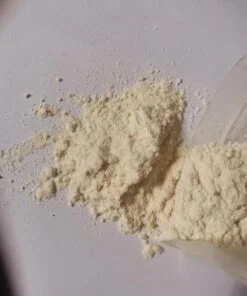
5-Bromo-DMT
Price range: $80.00 through $750.00
Chemical Identity
-
IUPAC Name: 2-(5-bromo-1H-indol-3-yl)-N,N-dimethylethan 1 amine
-
Molecular Formula: C₁₂H₁₅BrN₂
-
Molecular Weight: 267.170 g/mol
-
CAS Number: 17274-65-6
-
PubChem CID: Available through chemical databases
5-Bromo-DMT Powder: The Sea DMT Compound
What Is 5-Bromo-DMT?
5-Bromo-DMT (5-bromo-N,N-dimethyltryptamine) is a psychedelic brominated indole alkaloid belonging to the tryptamine family. It is structurally related to DMT (N,N-dimethyltryptamine), with a key difference: a bromine atom substituted at the 5-position of the indole ring. This seemingly small molecular modification produces dramatically different effects compared to traditional DMT.
The molecule features an indole ring system with a bromine atom at the 5-position and an ethylamine side chain at the 3 position, where the terminal nitrogen bears two methyl groups.
Informal Names
5-Bromo-DMT has accumulated several colorful nicknames within the psychedelic community:
-
Sea DMT :highlighting its marine origins
-
5-Br-DMT : the standard chemical abbreviation
-
SeaMT :a less common variation
Natural Sources: Where Does 5-Bromo-DMT Come From?
One of the most remarkable aspects of 5-Bromo-DMT is its natural occurrence in marine environments. Unlike many tryptamines that are found in terrestrial plants and animals, 5-Bromo-DMT has been isolated from several species of sea sponges.
Marine Sponge Species
5-Bromo-DMT has been identified in the following marine invertebrates:
-
Smenospongia aurea a species of sea sponge
-
Smenospongia echina another sponge species
-
Verongula rigida containing 0.00142% dry weight of 5-Bromo-DMT
In Verongula rigida, 5-Bromo-DMT is found alongside 5,6-Dibromo-DMT (which constitutes 0.35% dry weight) and seven other alkaloids. The presence of these brominated compounds in marine sponges highlights the unique chemical diversity of oceanic ecosystems and suggests that the compounds may serve a defensive or ecological role for the organisms.
Discovery and Research History
The story of 5-Bromo-DMT’s entry into the psychedelic consciousness is relatively recent. In 2013, a researcher discovered the presence of a DMT analog in a sea sponge sample and proceeded to synthesize and test it on himself. The report was subsequently shared with Hamilton Morris at Vice, who first publicly reported on the substance. First isolated in scientific literature from Florida sponges in 2008, 5-Bromo-DMT can be synthesized via straightforward methods, such as acid-catalyzed bromination of N,N-dimethyl-1-hydroxytryptamine.
Despite this discovery nearly a decade ago, there has been minimal further research on this chemical, and only a handful of anecdotal reports exist many describing underwhelming results. However, recent scientific interest has surged, with a 2025 study published in Molecular Psychiatry characterizing 5-Bromo-DMT as a “non-hallucinogenic psychoplastogen with antidepressant properties”.
Effects of 5-Bromo-DMT Powder
Psychoactive Effects
Unlike traditional DMT, which produces intense visual hallucinations, entity encounters, and ego dissolution, 5-Bromo-DMT is reported to produce exceptionally mild psychedelic effects.
Based on the limited anecdotal reports available, the effects include:
-
Mild psychedelic-like activity at higher doses
-
Feelings of relaxation and calmness
-
Lucid and mellow headspace
-
Comparable to low-dose LSA or N,N-DMT
-
Not visual at all, although lights may seem brighter and afterimages may persist slightly longer
One user report described the effect as “more like the antidepressant effects of DMT” rather than a classic psychedelic experience. The compound is noted for being sedating and relaxing rather than stimulating or anxiety-provoking.
Sedative and Antidepressant Effects
Animal studies have revealed that 5-Bromo-DMT produces effects suggestive of sedative and antidepressant activity. In rodent models, it caused a significant reduction in locomotor activity, indicating potent sedative properties.
A groundbreaking 2025 study published in Molecular Psychiatry found that in a mouse model of stress-induced depression, a single administration of 5-Bromo-DMT resulted in a significant reduction in depressive-like behavior, reflecting rapid antidepressant effects.
Duration of Action
The duration of effects for 5-Bromo-DMT varies depending on the route of administration:
-
Oral: Effects may be minimal or inactive
-
Higher doses (45 mg smoked): Psychedelic-like effects lasted only about 10 minutes, with relaxation persisting for approximately 1.5 hours
Dosage for 5-Bromo-DMT Powder
Proper dosing is essential when working with any research chemical. Based on the limited available data, here are the reported dosage ranges for 5-Bromo-DMT:
Smoked/Vaporized Dosage
| Dose Level | Amount | Effects |
|---|---|---|
| Mild | 15 – 20 mg | Subtle effects, relaxation |
| Moderate | 20 – 45 mg | Mild psychedelic-like effects |
| Higher | 45 – 50 mg | Near the limit of what can be physically inhaled |
The standard psychoactive dose via vaporization is reported to be 20–50 mg, with mild psychedelic-like activity observed at these levels. A 50 mg dose was said to be near the limit of what can be physically inhaled.
Oral Dosage
Oral administration appears to be minimally active or inactive. One report suggested that the oral threshold may be closer to 100-200 mg, stretching up to 400 mg for noticeable effects. However, this route is not recommended due to the high doses required and the lack of reliable data.
Important Dosage Considerations
-
Start Low: Given the limited research and individual variability, begin with a low dose (15-20 mg) to assess sensitivity.
-
Weigh Accurately: Use a milligram-precision scale for accurate measurement.
-
Vaporization Preferred: Smoking or vaporizing is the most reliable route of administration.
-
No Official Dose: There is no established “official” dose for 5-Bromo-DMT.
Routes of Administration
Smoking/Vaporization
The primary route of administration for 5-Bromo-DMT is smoking or vaporization. This method provides the most reliable effects and allows for better dose control. The compound can be vaporized using:
-
A glass pipe or “meth pipe”
-
A vaporizer designed for research chemicals
-
The “sandwich method” (layered between herbs)
Oral Administration
Oral use is not recommended due to the high doses required and the potential for minimal effects. If oral administration is attempted, doses in the range of 100-400 mg may be necessary.
Other Routes
There is currently no reliable data on other routes of administration such as intranasal (snorting), sublingual, or rectal administration.
Pharmacology: How 5-Bromo-DMT Works
Receptor Binding
5-Bromo-DMT acts as a serotonin receptor modulator with nanomolar affinity for several 5-HT subtypes. Key receptor interactions include:
-
5-HT2A Receptor: Has a pEC50 value of 5.51 for the 5-HT2A receptor
-
5-HT1A, 5-HT2B, 5-HT6, and 5-HT7: Demonstrates affinity across multiple serotonin receptor subtypes
Unique Mechanism: Non-Hallucinogenic Activity
Perhaps the most significant pharmacological finding is that 5-Bromo-DMT acts as a competitive antagonist at the 5-HT2A receptor and does not induce head-twitch responses or hallucinogenic behaviors in rodents.
The 2025 Molecular Psychiatry study confirmed that while 5-Bromo-DMT activates 5-HT2AR, it does not induce the head twitch response (HTR) in mice, suggesting non-hallucinogenic activity. This positions 5-Bromo-DMT as a non-hallucinogenic psychoplastogen a compound that promotes neuronal plasticity without producing psychedelic effects.
Neuroplasticity and Gene Expression
5-Bromo-DMT has been shown to upregulate immediate early genes (IEGs) associated with neuroplasticity in the mouse prefrontal cortex and hippocampus, including Arc, Egr-1, Egr-2, and Egr-3. It also promotes dendritic growth in cortical neurons. These findings suggest that 5-Bromo-DMT may have the potential to rewire neural circuits in ways that could benefit mental health.
Comparison with Classic Psychedelics
| Feature | 5-Bromo-DMT | N,N-DMT | 5-MeO-DMT |
|---|---|---|---|
| Hallucinogenic Potential | Low to none | High | High |
| Visual Effects | Minimal to none | Intense visuals | Minimal visuals |
| Primary Effect | Sedation, relaxation | Psychedelic breakthrough | Ego dissolution |
| Duration (vaporized) | 15 min – 1.5 hours | 5-15 minutes | 15-20 minutes |
| Therapeutic Focus | Antidepressant | Spiritual exploration | Mystical experiences |
Therapeutic Potential of 5-Bromo-DMT
Antidepressant Properties
The most promising aspect of 5-Bromo-DMT is its potential as a rapid-acting antidepressant. In a mouse model of stress-induced depression, a single administration resulted in a significant reduction in depressive like behavior. This mirrors the fast-acting antidepressant effects seen with other psychedelics but without the hallucinogenic side effects that can limit therapeutic accessibility.
Psychoplastogenic Effects
As a psychoplastogen a substance that promotes neuronal plasticity 5-Bromo-DMT may offer benefits similar to classical psychedelics in terms of rewiring maladaptive neural circuits. The ability to promote dendritic growth and upregulate plasticity-related genes suggests potential applications in:
-
Treatment-resistant depression
-
Post-traumatic stress disorder (PTSD)
-
Anxiety disorders
-
Substance use disorders
Non-Hallucinogenic Advantage
One of the major barriers to the widespread therapeutic use of psychedelics is their hallucinogenic properties, which can be overwhelming for patients and require extensive psychological support. 5-Bromo-DMT’s non-hallucinogenic profile makes it a more practical candidate for pharmaceutical development, potentially allowing for at-home use without the need for supervised psychedelic sessions.
Sedative Applications
The significant sedative effects observed in animal studies suggest potential applications as an anxiolytic (anti-anxiety) or sleep aid. However, much more research is needed to explore these possibilities.
5-Bromo-DMT vs Other Tryptamines
5-Bromo-DMT vs N,N-DMT
While both compounds share the same core tryptamine structure, their effects could not be more different:
-
N,N-DMT produces intense visual hallucinations, entity encounters, and ego dissolution
-
5-Bromo-DMT produces mild effects, relaxation, and minimal visuals–
5-Bromo-DMT vs 5-MeO-DMT
5-MeO-DMT is known for its profound ego-dissolving effects and mystical experiences, while 5-Bromo-DMT is reported to be “similar to low-dose DMT, but also distinct from it”. The bromine substitution at the 5 position dramatically alters the pharmacological profile.
5-Bromo-DMT vs Psilocybin
Psilocybin produces profound psychedelic experiences lasting 4-6 hours, while 5-Bromo-DMT’s effects are shorter-lived and much milder.
Legal Status of 5-Bromo-DMT
United States
5-Bromo-DMT is not explicitly scheduled under the Controlled Substances Act. However, as a structural analog of DMT, it may be subject to the Federal Analog Act if intended for human consumption. This means that prosecution is possible under federal law.
United Kingdom
5-Bromo-DMT is classified as a Class A drug under the Misuse of Drugs Act. Penalties for possession can include up to 7 years in prison and/or an unlimited fine.
Singapore
5-Bromo-DMT is specifically listed as a controlled drug in Singapore.
Sweden
5-Bromo-DMT (5-Br-DMT) has been subject to classification investigation by the Swedish health authorities.
Canada
The legal status of psychedelic analogs in Canada is complex. While DMT is scheduled under Schedule III, the law does not explicitly prohibit all analogs.
Russia
5-Bromo-DMT is controlled as a derivative of DMT, which is listed in Schedule I of the narcotic substances list.
Important Note: The legal status of 5-Bromo-DMT varies significantly by jurisdiction. Always research your local laws before considering any research chemical.
Safety and Harm Reduction
Known Risks
Due to the extremely limited research on 5-Bromo-DMT in humans, the full safety profile is unknown. However, based on animal studies and anecdotal reports, potential risks include:
-
Unknown long-term effects no long-term studies exist
-
Potential for respiratory irritation when vaporized
-
Sedation and loss of coordination may impair motor function
-
Psychological effects while mild, could be uncomfortable for some users
Harm Reduction Practices
-
Test Your Substance: Use a drug testing kit to verify the identity and purity of the powder
-
Start Low, Go Slow: Begin with a low dose (15-20 mg) to assess sensitivity
-
Use a Milligram Scale: Accurate measurement is essential
-
Have a Sitter: Even with mild effects, having a sober companion is recommended
-
Safe Environment: Use in a comfortable, familiar setting
-
Avoid Mixing: Do not combine with other substances, especially MAOIs, SSRIs, or alcohol
-
No Important Commitments: Ensure you have nothing scheduled after
-
Healthy State of Mind: Only use when in a sound mental state
Contraindications
-
Pregnancy and breastfeeding unknown effects
-
History of psychosis or severe mental illness
-
Cardiovascular conditions unknown effects on heart function
-
Use with MAOIs potential for dangerous interactions
Frequently Asked Questions
Is 5-Bromo-DMT the same as DMT?
No. While 5-Bromo-DMT is a structural analog of DMT, the addition of a bromine atom at the 5-position significantly alters its effects. 5-Bromo-DMT produces much milder effects and appears to lack the hallucinogenic properties of DMT.
Why is it called SpongeBob DMT?
The nickname “SpongeBob DMT” refers to the compound’s discovery in sea sponges, specifically species like Smenospongia aurea and Smenospongia echina.
What are the effects of 5-Bromo-DMT?
Effects include mild psychedelic-like activity, relaxation, sedation, and a lucid headspace. It is not known for producing intense visuals or ego dissolution.
How long do the effects last?
When smoked or vaporized, effects typically last from 15 minutes to 1.5 hours.
Is 5-Bromo-DMT legal?
Legality varies by country. It is a Class A drug in the UK, illegal in Singapore, and may be subject to analog laws in the US. Always check your local laws.
Can 5-Bromo-DMT be used therapeutically?
Emerging research suggests that 5-Bromo-DMT may have antidepressant and psychoplastogenic properties without hallucinogenic effects. However, human clinical trials are needed to confirm these potential therapeutic applications.
The Future of 5-Bromo-DMT Research
Current Scientific Interest
The publication of the 2025 study in Molecular Psychiatry has brought renewed attention to 5-Bromo-DMT. The finding that this compound acts as a non-hallucinogenic psychoplastogen with antidepressant properties positions it as a potentially groundbreaking candidate for pharmaceutical development.
Potential Advantages Over Classical Psychedelics
-
No Hallucinogenic Effects: May allow for therapeutic use without the need for psychedelic sessions
-
Rapid Onset: Single-dose efficacy in animal models
-
Favorable Safety Profile: No head-twitch response in rodents
-
Neuroplasticity Promotion: Upregulates genes associated with neuronal growth
Challenges and Limitations
-
Limited Human Data: No human clinical trials have been conducted
-
Unknown Long-Term Effects: Safety profile in humans is completely unknown
-
Legal Barriers: Scheduling and regulation may impede research
-
Synthesis Challenges: Production may be more complex than other tryptamines
Research Directions
Future research on 5-Bromo-DMT may explore:
-
Clinical trials for depression and anxiety
-
Structure-activity relationship studies
-
Development of novel antidepressant compounds
-
Investigation of sedative and anxiolytic properties
Conclusion
5-Bromo-DMT powder represents one of the most intriguing developments in the world of tryptamine research chemicals. Its unique combination of mild psychoactive effects, significant sedative properties, and promising antidepressant activity sets it apart from both classical psychedelics and other research compounds.
While its informal nickname “SpongeBob DMT” may suggest a novelty compound, the emerging scientific evidence points to something far more significant a non-hallucinogenic psychoplastogen with the potential to revolutionize mental health treatment. The ability to promote neuronal plasticity and produce rapid antidepressant effects without the hallucinogenic side effects of classical psychedelics makes 5-Bromo-DMT a compelling candidate for pharmaceutical development.
However, it is crucial to approach this compound with respect and caution. The lack of human research, unknown long-term effects, and complex legal status mean that 5-Bromo-DMT should only be used by qualified researchers in appropriate settings.
As scientific interest in 5-Bromo-DMT continues to grow, we may see this marine-derived compound transition from an obscure research chemical to a mainstream therapeutic agent. For now, it remains a fascinating example of how the natural world even the depths of the ocean can yield compounds with profound implications for human health and consciousness.
5 reviews for 5-Bromo-DMT
Add a review
Related products
BUY DMT
BUY DMT
BUY DMT
Tamela –
Everything arrived safely, but the outer box was a bit dinged up by the carrier.
Edith –
Good experience overall, I have never done dmt before and I found you guys and I was like why not give it a shot and boy am I happy.
Matthew Tomlinson –
Speedy delivery and great service. thanks
Vanessa –
Always great service and fast delivery. Prices for bulk purchases very competitive.
Gale –
International shipping was surprisingly quick and painless with customs.